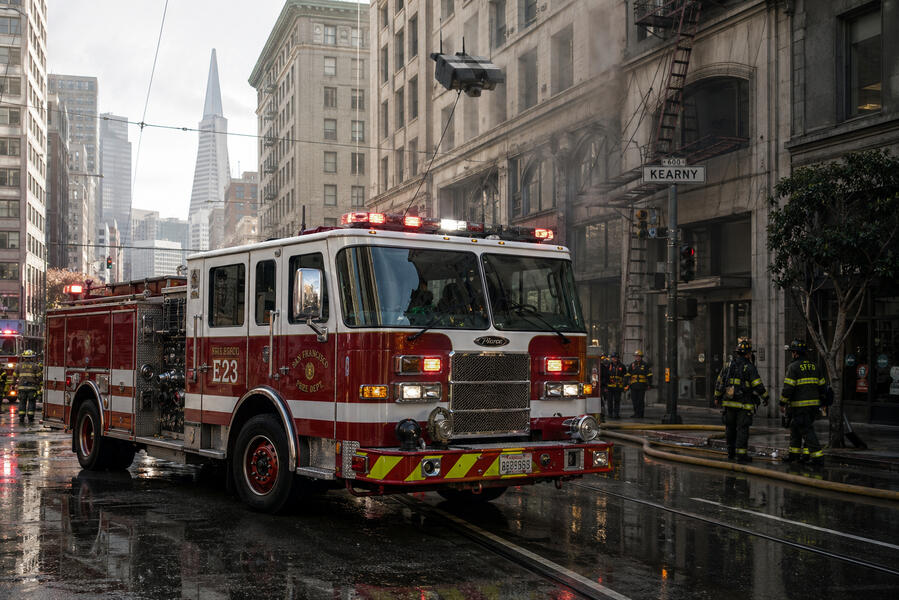
Fire Response
Fire & Disaster ResponsePersistent aerial visibility for emergency scenes, low-light operations, and disaster response.
TARVYN is developing a new class of aerial systems that replace exposed propellers with enclosed impellers and controlled airflow. Our architecture is designed to improve safety, reduce perceived noise, and enable aerial operation closer to people and infrastructure.
Our propulsion system supports multiple configurations. We are starting with a tethered aerial platform because it is the fastest, safest, and most deployable way to bring TARVYN into real-world use.
Aerial visibility for emergency scenes, low-light operations, and disaster response.
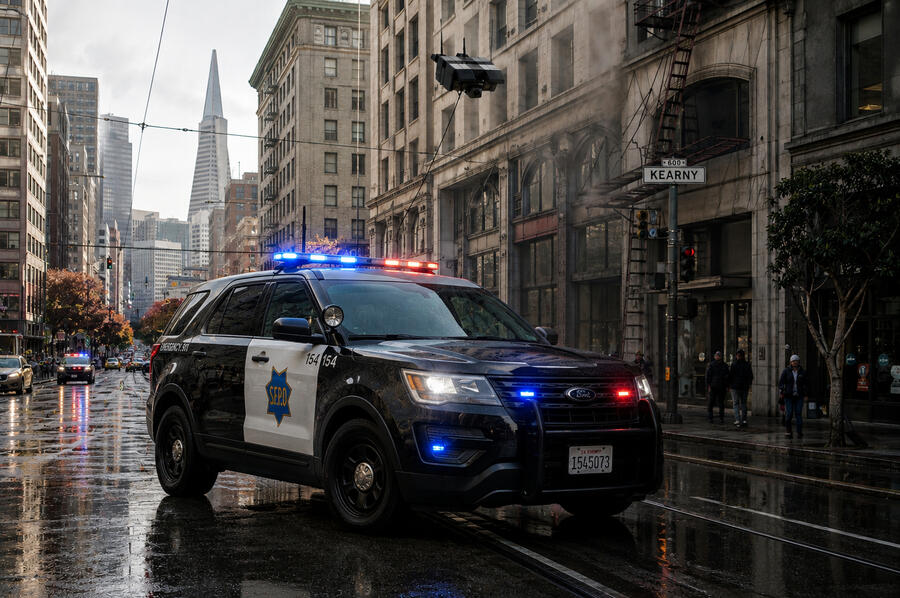
Controlled aerial lighting and observation for incident response and perimeter awareness.
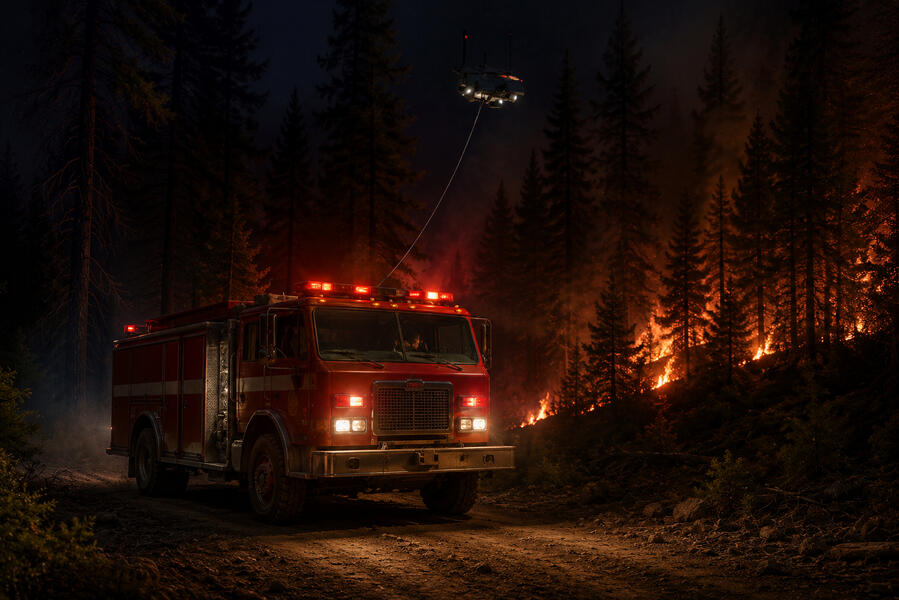
Safer proximity observation around utilities, construction zones, and controlled environments.
Conventional multirotor drones are effective in open air, but exposed high-speed propellers create safety, acoustic, and proximity limitations around emergency responders, vehicles, buildings, utilities, and controlled environments.
Public-safety teams and infrastructure operators need persistent aerial lighting, observation, and situational awareness closer to real-world activity.
TARVYN is developing a protected airflow UAV platform to address these operational limits through enclosed impellers, controlled airflow, and a tethered-first deployment strategy.
Exposed propellers limit operation near people, responders, vehicles, walls, trees, and infrastructure.
Traditional blades create a sharp acoustic signature and require conservative distance from sensitive environments.
Public-safety and observation missions often require longer endurance than battery-only multirotors can provide.
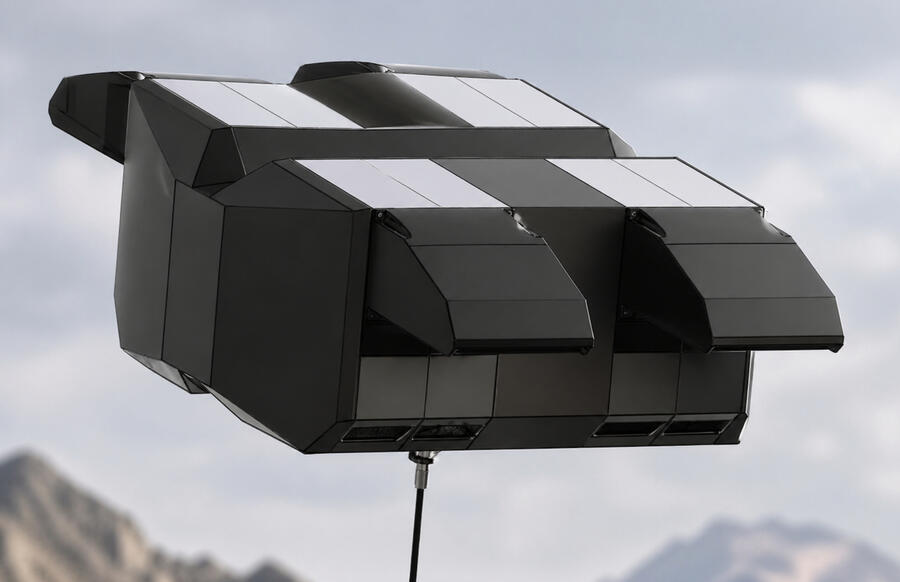
TARVYN uses enclosed impellers to accelerate airflow inside the platform. Curved deflectors redirect that airflow to create dynamic pressure lift while keeping primary propulsion components protected inside the system body.
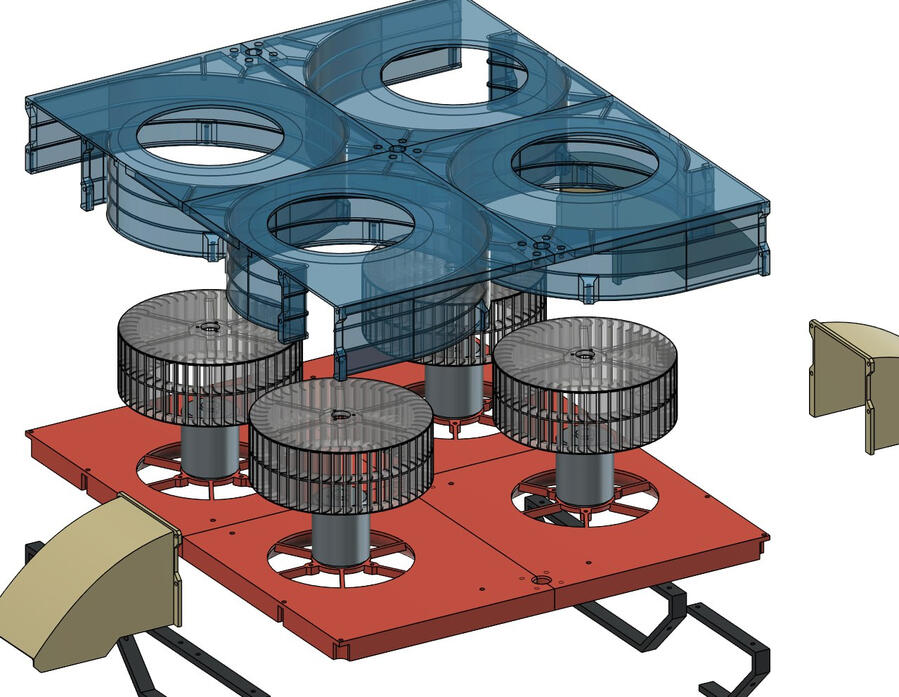
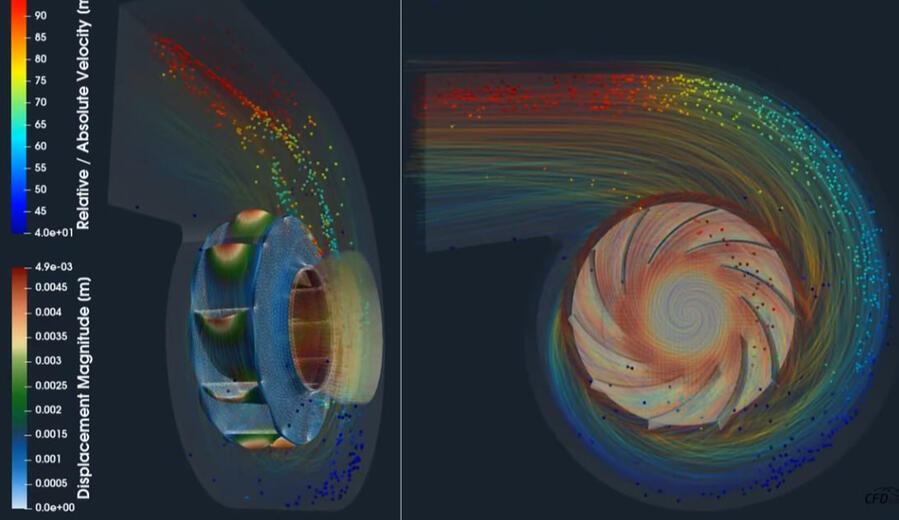
Electric impellers generate controlled high-speed airflow inside the protected UAV body.
The system concentrates airflow energy through an internal path instead of relying on exposed external rotors.
Deflectors redirect airflow to generate lift-producing dynamic pressure while maintaining a protected architecture.
The first direction is a tethered aerial lighting and observation platform fo
TARVYN’s tethered-first direction is focused on aerial lighting, observation, and situational awareness for public safety, emergency response, infrastructure, and controlled environments.
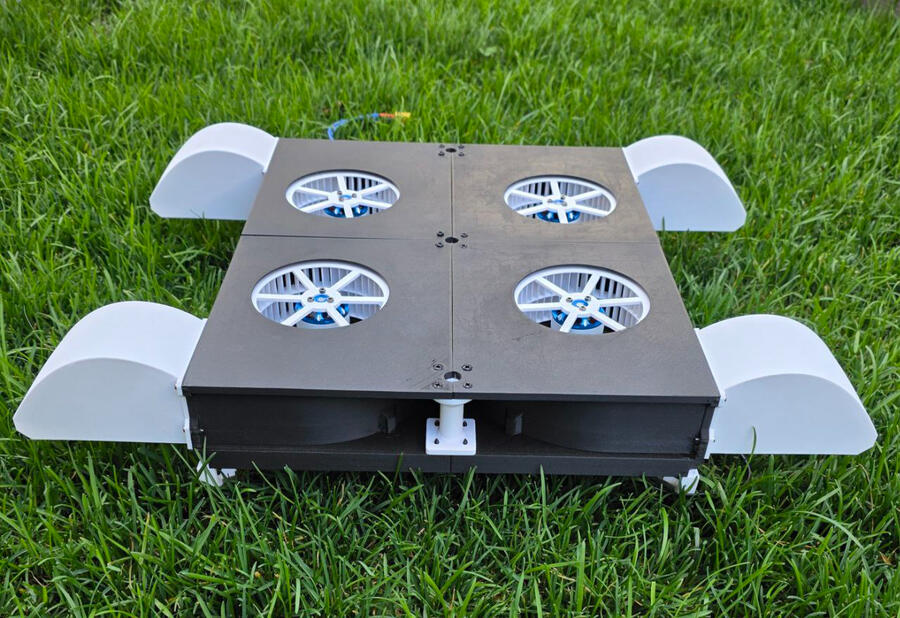
Three guided prototype tests showing TARVYN’s protected impeller-deflector configuration and the next path toward tethered hover stabilization.
TARVYN is advancing from controlled lift demonstration toward tethered hover, active stabilization, airflow optimization, and public-safety deployment.
Controlled lift demonstrated in guided prototype testing.
Development of active stabilization, control authority, and tethered hover performance.
Refinement of airflow geometry, thermal management, acoustics, structure, and weight balance.
Tethered aerial lighting and observation system for controlled environments and partner pilot programs.
We are seeking investors, engineering collaborators, public-safety partners, aerospace companies, OEMs, and organizations interested in helping bring protected airflow UAV systems into real-world use.
Clear answers for investors, public-safety partners, engineering collaborators, and organizations evaluating TARVYN’s protected airflow UAV platform.
Not yet. TARVYN’s current demonstrated milestone is controlled lift in guided prototype testing. Free hover and full active stabilization are active development milestones.
A tethered configuration creates a practical first deployment path with clearer safety boundaries, longer operating potential, and strong fit for public-safety lighting and observation missions.
TARVYN is focused on protected airflow propulsion using enclosed impellers and controlled airflow deflection instead of exposed external propellers.
Exposed propellers limit drone use near people, responders, vehicles, buildings, trees, infrastructure, and controlled environments. TARVYN is designed to reduce that operational limitation.
The first direction is a tethered aerial lighting and observation platform for fire response, police operations, infrastructure monitoring, emergency scenes, and controlled environments.
No. TARVYN is not trying to replace all drones. The focus is on missions where protected propulsion, proximity safety, persistence, and controlled deployment matter most.
Investors, engineering partners, aerospace companies, public-safety organizations, OEMs, and pilot-program partners interested in safer aerial systems.
TARVYN is based in New York, USA, and is developing its protected airflow UAV platform for future public-safety, infrastructure, and OEM partnership opportunities.